A lot of the electric (mostly fuel cell) aviation startup industry is funded/supported by currently profitable aviation companies. The 1000hp motors for them are, like the airframes, one of the mostly off-the-shelf elements of their development.
I agree that even modern batteries are pretty absurd for any human scale flight, though scaling laws make smaller aircraft more reasonable.
From a CO2 perspective, synthetic fuels don't have an intrinsic advantage, unless you use biomass as your source of carbon. Traditionally, synthetic fuel has been made using coal or natural gas as the source of carbon. There is still some advantage to this, the nitrogen and sulfur content of the fuel can be dramatically reduced, which is great. But with regard to C02 specifically, you're basically burning coal. With biofuels, I think care needs to be taken to ensure we don't ruin the price of food for people by incentivizing farmers to grow fuel feedstock instead. Biofuels made from algae might be the best, since this wouldn't require the use of arable farmland.
Another approach is to pull the CO2 straight out of sea water. Apparently the US Navy thinks this might be a viable approach, since their nuclear aircraft carriers have power to spare.
Atmospheric carbon capture seems like an petroleum industry scam to me (check the 'Members' page of that website.) In principle it's what plants do, but plants do it using scale; there's a whole bunch of them. CO2 is under 500ppm in our air, and air isn't particularly dense in the first place; the amount of air you'd need to move through your capture plant is immense.
On the Costs & Outlook page of this site, they list their potential feedstocks; it's all biomass, except for the 'Technical Potential "Unlimited"' column, which mentions Power-to-Liquids. But how does that actually work and does it actually make sense?
The U.S. navy is interested in a fuel synthesizer that works on co2, seawater and uranium and they can pay more than you per gallon because you don’t have to refuel an aircraft carrier in a war zone.
I fully agree with the bit about atmospheric carbon capture. What a pointless waste of energy. But if you start thinking of plant biomass not as the energy source, but just as the carbon provider for making carbohydrates from your hydrogen, then energy crops vs food crops conflict suddenly disappears, because the nutritious parts usually come alongside plenty of lower energy "plant waste" that should be good enough as a carbon provider for hydrogen "carbonation". Certainly much better for the task than atmospheric CO2. And all that plant carbon would soon continue it's cycle as atmospheric CO2 anyways, so it's just as good as atmospheric capture.
Obviously in the present context "synthetic" refers to fuel produced using renewable energy. If you are willing to use petroleum, you don't need to synthesize anything because that is where you started, unless maybe you are turning NG into kerosene. But that would be a dead end technology, so would not return investment.
Energetically, the principal synthetic fuels will be anhydrous ammonia and hydrogen. Capturing CO2 to make methane and kerosene is possible but more expensive. In particular, you need hydrogen as input, and must both capture and crack the CO2.
But for some uses you still need hydrocarbons, at least for now. Given carbon taxes subsidizing synthetics, the synthetics could be competitive.
In the longer term, aviation does much better with liquid hydrogen fuel, but it takes new airframes or, at least, extensive retrofits.
> A problem with biofuel is scaling it up, see: https://ieeexplore.ieee.org/document/7498153. According to that article the U.S. would need to devote "an area bigger than Texas and California and Pennsylvania combined" to crops specifically for its own jet biofuel needs. That's just for flying, not for food or fuel for ground transportation or anything else.
Also that article says that from 2009-2013 a $100 million effort was made to figure out how to get sufficient synthetic fuel from algae but they eventually gave up and went back to the drawing board.
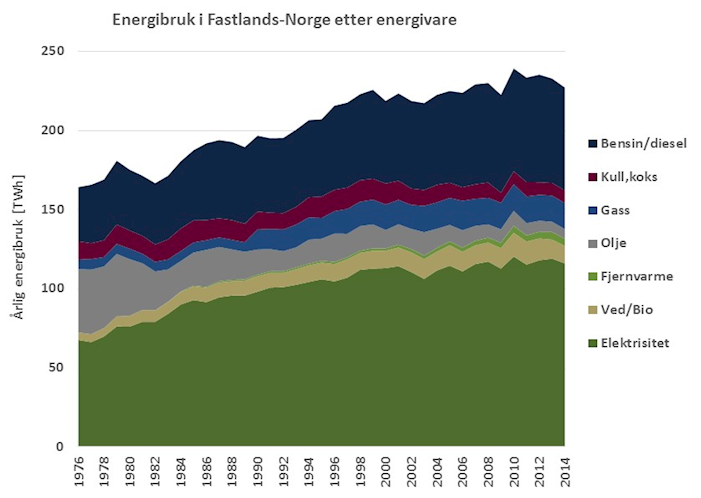
Firewood and derivatives have always had an important place in heating and cooking, and are likely to continue in that role for a while. Other types of biomass based hard fuels (from recycled garbage/waste, algae, etc) will most likely also play a role in electricity production and heating, but perhaps a small one (unless algae based biomass takes off).
And for liquid fuels for transportation use, algae may also end up being a competitor to hydrogen when oil runs out. I remember there were a lot of companies working in that space 10 years ago, but then there was the oil price crash in 2015, and it seems many switched away.
For instance algenol was positioning itself as a fuel company, but appear to have diversified:
Firewood does not constitute a "substantial amount", by any industrial measure. It will continue being used, in decreasing amounts as very cheap efficient stove designs gradually penetrate the tropics.
Growing algae occupies >10x the area of floating solar panels producing the same usable energy. Harvesting and processing algae costs >>1 orders of magnitude more than delivering electrical power via wire.
The reasonable expectation is that transitions will be toward cheaper alternatives, with societal inertia acting to delay transition well beyond the point of obvious benefit. Thus, existing nukes will continue operating well after building solar + storage and then switching to that would be cheaper.
I keep thinking the direction kitchens are headed in developing countries is a solar powered microwave, induction cooktop, and fridge.
Does the lady of the house want to collect scraps of firewood and then cook in a hot already smokey kitchen or on a only heats the pan induction cooktop? Yeah.
The bottom billion people have no counter to put a microwave on. A solar panel, battery, microwave, induction cooktop, and fridge would cost several years' income preferentially spent (e.g) eating.
Getting together $10 for a stove that needs 5x less firewood is a challenge. They need a new one every year because making one that lasts costs more.
For pure e-fuels they project 32 PWh. That is, to put it in perspective, more than the total world electricity production today. You'll want to use every technology available to do this in a more efficient way - batteries for very short ranges, hydrogen for mid ranges, e-fuels only for long range where nothing else works. It'll still be very challenging and likely the current growth projections of the aviation industry will be seen as unrealistic fantasies at some point in the future.
> For pure e-fuels they project 32 PWh. That is, to put it in perspective, more than the total world electricity production today.
Total annual electricity production is 161 PWh. THe PDF you linked puts it in perspective by saying that if it were purely powered by renewable energy it would increase the size of the renewable energy sector by 3 to 5 times. In other words this doesn't sound hard at all from an electricity standpoint. If electrical generation were half the cost it would be economical right now.
> We find that an electricity emissions factor of less than 139 g CO2e per kW h is required for this [Direct Air Capture system paired with Fischer–Tropsch synthesis] pathway to provide a climate benefit over conventional diesel fuel.
The grid averages in most regions are higher than that. I don't think multiplying current renewable generation just for jet fuel is easy.
Yeah they are, and this fact is just overlooked by people who aren't thinking through the implications of abundant renewable energy. With a surplus of renewable energy it makes much more sense to manufacture synthetic liquid fuels and burn them, than it does to power airplanes with batteries. The energy cycle is grossly inefficient but nobody is going to care because the energy inputs will be nearly cost-free.
I had that thought recently. Renewable energy sources like wind need a lot of energy storage. That is, unless you over-provision them so much that they can always meet demand even at peak times. This leaves you with over-production at other times, which could be used for other purposes that don't need to run continuously: synthetic jet fuel production, water desalination, etc.
Basically, overprovision and then set electricity rates based on demand, and the renewable energy "storage problem" might just sort itself out. Of course, all those windmills and solar panels will cost an awful lot, so it might not be as simple as "overprovisioning".
> That is, unless you over-provision them so much that they can always meet demand even at peak times.
Overprovisioning solar to power the grid on ice cold, windless new moon night is going to be hard. Having somewhere to put excess energy and some overprovisioning is always good, but it won't solve all storage problems.
If we can build a superconducting grid, we can transport power from the parts of the planet where it is sunny or windy to the parts where it isn't. Assuming that everyone remains friendly and operational, that is.
CAISO hits about 100gCO2e/KWh during the day. And I run a solar surplus that I don't put back on the grid.
I'd be really happy if there were a good way for me to turn excess electricity into something I could use later. Maybe that's hydrogen. Maybe that's capturing carbon and putting it into liquid fuels. Maybe that's creating graphite that I can use for fun personal projects.
But regardless, I don't expect grid electricity prices to fall. Probably not in the US. Definitely not in CA.
These can possibly be addressed by catalytic converters in the exhaust (not sure how feasible that is in a turbine engine though). In any event, it's a small fraction of total greenhouse emissions, dwarfed by CO2. Let's not let perfect be the enemy of good.
Oh I wasn't concerned about their greenhouse effect contribution. NOx can cause asthma and bronchitis and can aggravate pre-existing heart conditions. They also form smog.
Did I mention that they are bad for the ozone layer?




I agree that even modern batteries are pretty absurd for any human scale flight, though scaling laws make smaller aircraft more reasonable.