I've been saying that for years. Here in europe, the reason the life expectancy is high is that it's based on people who die today at ripe old age, many of them having been retired 30 years, sometimes more... They are 85+, and they drag the mean age of death thru the roof.
When THAT lucky generation is gone, I think statisticians will realise that their children are /nowhere/ near as lucky, and I'm pretty sure the life expectancy number will fall off a cliff.
I don't have anything to back it up mind you, but raising the age of retirement, more stress related to job stability, whatever, you name it; it's just empirical but I've seen a lot of people in my environment die in their 60's -- many of them who had a perfectly 'sane' way of life.
I know what you are thinking, many more people will die at 60 then will die at 90, but I'm still pretty sure there's some underlying pattern here.
Also, I do have a vague impression that making access to the NHS more difficult PLUS raising age of retirement EQUAL MOAR PROFITS for someone, somewhere.
Are you sure retiring early leads to a long life expectancy? I would expect the opposite. My father still works and he is very healthy for an 88 year old. Anecdote is not data, but people in my family seem to stay healthy by working or staying very active.
I think part of the point is to find a avocation that is not stressful, you enjoy, and can do a long time. That may be worth more than money.
> My father still works and he is very healthy for an 88 year old.
This is usually related to the kind of job you are doing.
My mother was cleaning schools and that is a killer for the back. Being retired, she takes long walks and keeps herself active and healthy.
But when I was studying I saw quite old teachers still active, and happy. But that's a different kind of job with different effects on your health.
> I think part of the point is to find a [a]vocation that is not stressful, you enjoy, and can do a long time.
I agree. If you are lucky enough to get a job that fulfills you, then continuing working can be a good thing. That's why we can't just delay retirement age, but we need to take into account personal circumstances.
A not stressful and enjoyable work also helps you to keep your good health for longer, so you get in better shape to old age.
Great point. I wonder, if everyone should, in their middle ages, really think this through. And perhaps make a career change if their work requires something they wouldn't be comfortable doing later in life.
One of the best professions I can think of retiring in is probably academia... I've worked/studied/socialized with professors very much older than me, and they seem to continue to enjoy teaching/talking to students despite their age.
I sometimes wonder if a lot of the freshly educated programmers I hire really know what they are in for.
In 25 years they'll still have 25-30 years of work left in their lives, and by then most of them won't have received any significant reschooling, and they will still be competing in a tech world, where 10 years ago there wasn't a thing called smartphones.
Some of them will do just fine. I know a lot of old programmers, but I also know a lot of former older IT employees who are spending their 60ies in the unemployment lines.
An engineer educates him/herself with foundational knowledge, supplemented off course, with programming. By "foundational knowledge" I mean the knowledge and experience in the application of software to solve real world problems. The insight you gain doing that, makes you an engineer, not a programmer. And this makes you valuable. More valuable than a kid of the street who knows the latest buzzword tech.
Moral of the story:
Be an Engineer, not a Programmer.
Be Valuable, not Replaceable.
No, that doesn't address the problem at all. If you retire thirty years before you qualify for medicare, you have no idea what your medical expenses will be. None. They could amount to millions of dollars over those three decades, depending on your particular issues, and you're never going to close that gap by minimizing expenses.
It does. Just because you aren't comfortable with that risk doesn't mean it's impossible. It just means your risk tolerance is lower than the aforementioned people who did retire 30 years early.
The amount of people who will actually do this and go through it is so tiny that this comment is worthless. Give and take a few years (and perhaps not in SF/NYC), you could say this about any decent paying job.
The problem with that is that your COL in those 10-15 years is significantly impacted. That's probably 10% of your entire life. While I understand some people might be comfortable with the tradeoff... its important to remember there is something you are giving up.
Eh... sure, if you're only paying federal taxes. But in on that $140k you're going to end up with about $92k. And everything is more expensive in cities. The idea you're going to live in SF and save more than about half that, even living like a monk, is kind of fanciful.
NYC is even worse - lop another thousand off and pay even more to live.
I've personally lived in both cities and you can live perfectly well on $4k a month with a couple of roommates. Better than the average American even.
Then, if you invest $46k a year for 15 years at a real return of 4% you end up with ~$943k in present day dollars which is right around what the parent was saying.
Not to mention $140k total compensation is relatively low for a senior dev in SF/NYC, you will likely be making a lot more 10 years in.
You will be making $200k+ in SF even in your early years, if you climb the corporate ladder you can get to $300k in 5 years.
You can definitely sock away enough even without a 4% rate of growth to put away $1MM of after-tax money in 10-15 years, if you're smart with your money.
Well yeah, the old "job for life" where one specific set of skills with perhaps some minor updating here and there is good for 40 years is long gone. Sadly many were raised with different expectations.
Well there is that, but there is also an unwillingness to reeducate especially in the private sector.
I've worked in public service all my life and I took a master degree in business and leadership which was paid by my employeer. Which moved me from engineering to management.
When I see my old study buddies, who all work privately, none of them have gotten any form of reeducation and very few have kept up with the tech.
I'm sure most of them could learn the new buzzwords if they wanted to, but who would hire them until they do when you could simply pick a fresh candidate with newer CS knowledge, all the buzz and a lower pay requirement?
That is a great point. Not every job can be extended late into life. But like your mother, I think you have to stay active and find something that challenges you.
Mostly dealing with octogenarians+ whom I know; the more active you are (more so socially, as well as physically) the better off you are at living a long and healthy life. Having a routine like a job sets also seems to help human psyche. Your point about vocation that is not stressful, enjoyable, and is lasting satisfies all these requirements.
I didn't say inactive, I just said retired. I agree than people who 'stop' will tend to die of boredom. I've got a prime example in my family at the moment. I've also got the other side of the coin where that chap is nearly 90, is on several councils, charities and never seem to sit around for 2 minutes. He's as strong as an ox!
Agreed about dying of boredom. The brain needs stimulation. I've seen shut-ins go in a downward spiral quickly, while 98-year-old gardeners die peacefully in their sleep on an otherwise normal, active day.
Working with your mind in a stress free environment will make you old. Mining coal, crawling around in asbestos, being pushed by a never ending competition or sitting still doing nothing won't.
So there are upsides and down sides to work/retirement thing. The best you can do is academia or a retirement spent learning new things.
This may just be selection bias. Had your father died at age 70, you'd be thinking the reason was he didn't retire early enough.
My dad retired at 55 as his health began to decline. He's still alive at 78, and there's no way he would have lived this long if he didn't retire when he did.
Economics is not a monolith of wages and taxes. In a family there are many householding activities where retirees can contribute to the economic health of society.
Retirement should be a focus for these types of activities. Things like tending a small garden, or playing with grandchildren.
At least in the US, this is going to require a shift in both the workplace and the home.
My father is 65, my mother in law is 59, and my father in law is late 50s (my mother passed away recently at 59). All three of them must still work full time because they can't afford to retire, preventing them from helping with our 1 year old (causing us to have a limited support system, which I supplement with a part time nanny).
Optimum age for taking Medicare and SS also play a factor. Even if I had enough money in my 401K to retire at 45, medical insurance would eat it up. Need to wait to get on Medicare.
I'd assume the increased life expectancy is more about the free healthcare than the earlier retirement.
Free treatment for everything. That does help a lot when you get old, starting with all the minor problems happening with an aging body, and concluding with the last few years where you could literally be kept alive despite a critical condition requiring constant care, all paid in full by the tax payer.
Yeah, again, anecdota is not data, but I knew a few people who fully retired after just 15 years of work(in Poland certain professions are allowed to retire that quickly with full benefits, that includes policemen,firefighters and miners) and they all died before reaching 60, having only worked until the age of 33-35.
I suspect retirement and age expectancy is a correlation NOT causation type of deal. People who have the privilege of affording to retire early are more likely to be educated and chose a healthy lifestyle, thus living longer.
It seems like a positive feedback loop to me. You would expect healthy people to be able and willing to keep working instead of retiring. Esp. if their work involves some physical activity it helps keeping them healthy.
I've actually heard the opposite - that people can tend to die within a year of retirement, generally because they don't have anything purposeful left to do.
> Updated projections from the Institute and Faculty of Actuaries, based on death statistics from the Office for National Statistics, suggest that men aged 65 will now live another 22.2 years, down from 22.8 years in 2013. Women aged 65 will now live for a further 24.1 years, down from 25.1 years in 2013.
The analysis seems to focus on first order changes, not longer term second order changes so if there was an effect like you describe e.g. those born 80 years ago being much healthier than those born 60 years ago, their positive contribution might mask deeper problems.
As a continent yes. With brexit following through and historically anyway I think any singular state should not be categorized into the whole so easily. Similar to how I do not think Minnesota equals the USA
It doesn't make a lot of sense to lump European countries together for this kind of stuff, but to the extent you do France and Germany probably have more in common with the UK than, say, Greece.
Manufacturing, farming, fishing, etc were much more common industries for those who are now 85 than it is for those who are now 55.
There is a huge difference between retiring from manual labor at 60 after having worked from you were 15 and retirering from a desk job at 65 after having worked from you were 25.
Then take into account that they used to work Saturdays, that they used to work more hours per day, that fewer had recognized disabilities, that fewer received welfare, that they had much less vacation, that women had more pregnancies and that those of them that worked had shorter maternity leave.
The 'lucky' old had worked more and physically harder at 60 than we will have at 70.
Everything you say is true except for "that they had much less vacation" -- in truth, they had much more vacation. The average American male now works 270 hours more per year than the average American male of 1970.
A useful (though old) book on this subject:
The Overworked American: The Unexpected Decline Of Leisure – by Juliet Schor
Be careful about selection bias in your empirical data.
Suppose you're 50. You probably know more people 10 years away from your own age than 40. So no surprise you see more people die at 60 than at 90, because you know more at 60 in the first place.
And of course there's always a survivorship bias in life expectancy numbers. Life expectancy for a currently-living baby-boomer is over 80, because the boomers who die under 70 are already dead and no longer pulling down the average.
> Here in europe, the reason the life expectancy is high is that it's based on people who die today at ripe old age, many of them having been retired 30 years, sometimes more... They are 85+, and they drag the mean age of death thru the roof.
30 years? I suspect you are overdramatizing that.
AFAIK people stop working at age 65 in Europe (its 67 in NL, was 65, and it was raised because of higher life expectancy). I think in Germany its higher. In Greece it was 55 IIRC, and that was one of the reasons of the crisis, but Greece was an outlier (and AFAIK they're raising it).
If we assume its 65 it still isn't as if people are becoming 95 on average.
So you need 2 points of data, and they contradict with my anecdotal evidence from my EU country.
Please provide your sources?
> I don't have anything to back it up mind you
Maybe we should start the debate once we do have the data.
In most well-developed countries, life expectancy of women at 65 is around 22 remaining years. I.e. once you have reached the age of 65, on the average you live until the age of 87, give or take a couple of years depending on country. Longest lives in Japan and France.
So depending on retirement age, people spend well over 20 years in retirement on average, but as the previous commenter said, many of them will be in retirement for 30 years.
> and I'm pretty sure the life expectancy number will fall off a cliff.
What?
With no wars, no shortage of food, with all the advancement in health care do you really expect to live less than my grandma, who's 94 and outlived three major world financial crisis and a world war?
One of the great ironies is how the abundance of food in the west is leading to obesity, heart disease and high blood pressure. Instead of people being unhealthy due to chronic, persistent malnutrition, people are unhealthy from carrying too much body fat.
Last I heard, nearly half of all Americans were overweight or obese. Have you ever noticed how few fat old people there are?
Some experts fear we might loose (some) antibiotics in the coming years. If that's going to happen then I am sure life expectancy will go down massively.
By definition, life expectancy increases with age as a trend owing to better postnatal care over the past few decades. As the infant mortality rate has gone down, the life expectancy has gone up.
Infant mortality has started going up in parts of the USA.
There might be some connection with the conservative approach to defund women's healthcare as some sort of cost savings.
When we see things like: "it is not uncommon for her patients to drive two hours for an appointment, as maternal wards have closed at rural hospitals. "
it's probably due to demographic changes more than defunding healthcare as such. If you have communities where there are no jobs, people move out, population diminishes, that also means that some services are shut down.
This happens also in my country (which is a North European welfare state with good pre- and postnatal care and very low child mortality): some people have to go quite far away for the check-ups.
That's more economics than demographics. But yes, Hospitals and medical services in rural communities are disappearing at a phenomenal rate. Demographics do play somewhat of a role, but nothing compared to the change in our healthcare system (and how we pay for it) in the past 50ish years.
It has in part to do with increased cost of healthcare, difficulty of having one family doctor offices, necessity of specialized services (all leading to an agglomeration effect, why you now see "healthcare cities" in more rural areas, where one city among a dozen has the only hospital and lots of other medical services available.) I'd also say that many hospitals are now parts of large chains that are "not-for-profit" in name only, while acting exactly like for profit entities.
While rural areas are typically shrinking, there is still a very large amount of people who live in rural areas in the US. It's the loss of their economic impact (and the above factors) that have made their medical services disappear.
But it's a complex issue and no one seems to have found a solution here in the US yet. But it's going to keep getting worse in the foreseeable future.
Post-infancy life expectancy and life expectancy at adulthood have also both risen, though. Until recently, adult life expectancy in the first world was rising pretty steadily for all groups - it's turned around for some populations in the last few years.
Generally deaths at all ages are tracked and considered in the life expectancy. There was a website posted here where you could enter your age and location and it would tell you how much longer you had to live :-) (yes it was click bait but it also had a great discussion about how life expectancy was calculated and how the number varied primarily by age, location, and socio-economic status. Other factors such as smoking or not had a big impact the effects on the median value quickly tailed off.
There is a growing gap in life expectancy based on income, and many of the people collecting private pensions qualify as upper income. I doubt that companies will get much of break once that is factored in.
> Also, I do have a vague impression that making access to the NHS more difficult PLUS raising age of retirement EQUAL MOAR PROFITS for someone, somewhere.
In the case of NHS, wouldn't that be the tax payer?
> When THAT lucky generation is gone, I think statisticians will realise that their children are /nowhere/ near as lucky, and I'm pretty sure the life expectancy number will fall off a cliff.
Much of the developed world is having a population crisis. When pensions/government benefits were created in the early 20th century in the US, western europe and japan, they were experiencing population booms.
Take japan for example, which is similar to US/Western Europe.
This is the same problem in most western europe countries. In the US, it's not as bad because of immigration, but if you only include native born americans ( non-immigrants ), our population demographics is even worse than japan. Native born americans stopped procreating at replacement levels since the late 1960s.
Unless Japan/Western Europe bring in millions of immigrants, they are going to be in for major problems because of their liabilities to retirees. A shrinking population can't hope to support the older generation. And the worst part is that if younger generation has to support the older generation, they will put off have kids because they simply can't afford them. Which in turn exacerbates the problem and it turns into a vicious cycle.
But immigration also has its own problems. So the industrialized world is caught between a rock and a hard place.
Even in the US, the pro-immigration policy is a stop-gap measure. The population can't grow forever.
Blackrock has an interesting paper on the overall trends.
This isn't a "crisis". Existing entitlement benefits are too high for the coming steady-state economy, but by like 30% or so. Adjustments will have to be made (e.g. some made-up numbers: we can work 10% longer careers, take 10% lower benefits, and expect a 10% boost in general productivity over this period), but we're hardly talking destitution or social upheaval here.
Retirees in the 2040's are going to see less resources-per-GDP dedicated to them than retirees in the 1980's for sure. But then they'll also have pervasive VR headsets and a plausible cure for cancer handy, so I'm guessing it'll be a wash.
Then we're long since doomed, because health care expenditure as a fraction of GDP (a rather larger pot of money than even retirement entitlements) has grown by like 700% (or whatever) over the last half century.
Time frames matter. The demographic change we're talking about is going to happen over the next 40 years, it's not like Black Tuesday.


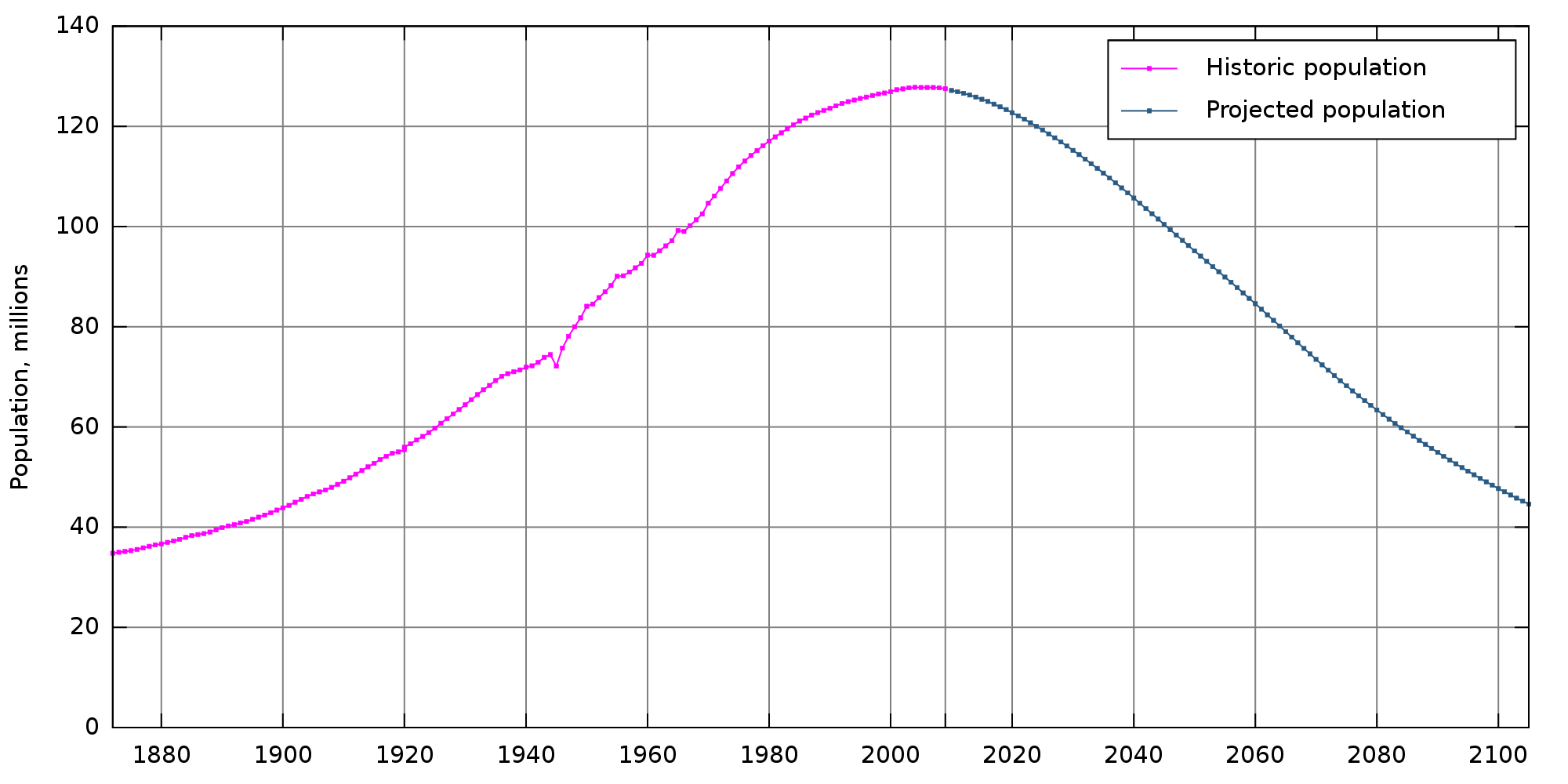
When THAT lucky generation is gone, I think statisticians will realise that their children are /nowhere/ near as lucky, and I'm pretty sure the life expectancy number will fall off a cliff.
I don't have anything to back it up mind you, but raising the age of retirement, more stress related to job stability, whatever, you name it; it's just empirical but I've seen a lot of people in my environment die in their 60's -- many of them who had a perfectly 'sane' way of life. I know what you are thinking, many more people will die at 60 then will die at 90, but I'm still pretty sure there's some underlying pattern here.
Also, I do have a vague impression that making access to the NHS more difficult PLUS raising age of retirement EQUAL MOAR PROFITS for someone, somewhere.